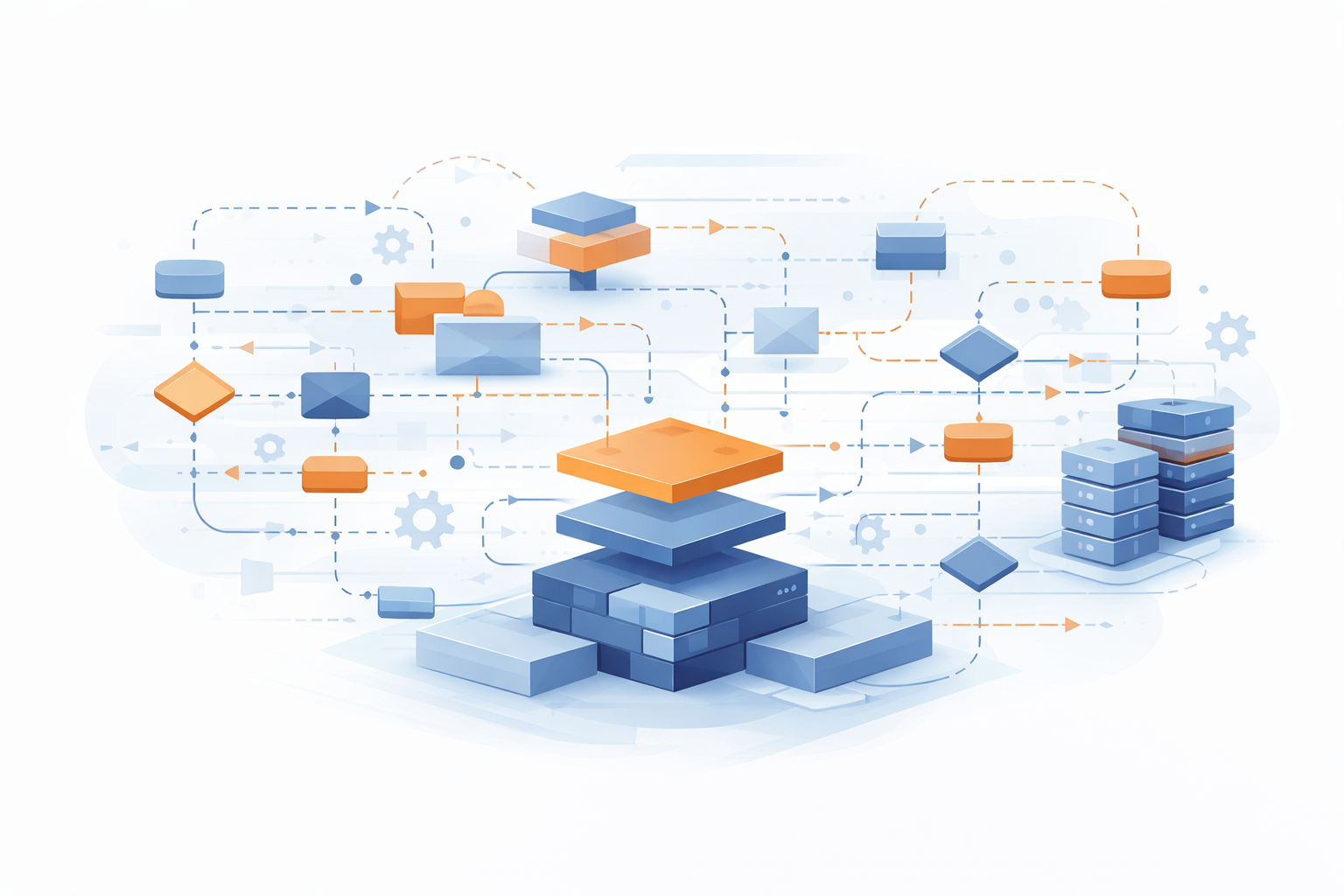
Where it slows down, where data gets re-entered, where risk accumulates. Automation is applied to those specific points with governance built in from the start, not bolted on later.
Every solution is designed around three realities: your processes will face exceptions, your volume will change, and someone will audit it eventually.
Talk to a SpecialistReplace evolving workarounds with structured, AI-assisted intake.
Most intake processes were never designed. They evolved. Someone set up a shared inbox, a spreadsheet started tracking submissions, and now the whole thing runs on institutional memory. JPI replaces that with structured, AI-assisted intake. Documents are captured, classified, and indexed at the point of entry without manual re-keying.
- Incoming documents classified and filed without manual sorting
- Key data fields extracted and populated automatically
- Intake tied directly to the workflow that acts on it
Structured routing that does not break when volume increases.
Email-driven approvals break the moment volume increases or someone is out of office. Work stalls, deadlines slip, and nobody knows where things stand. JPI builds structured approval workflows that route based on rules, roles, and conditions. Parallel reviews run simultaneously. Escalations trigger automatically.
- Approvals routed based on defined criteria, not forwarded emails
- Multiple reviewers working in parallel instead of waiting in line
- Automatic escalation when tasks sit too long
Governance enforced by the system, not by memory.
Compliance gaps are usually not caused by negligence. They are caused by processes that rely on people remembering to do the right thing consistently across every transaction. JPI configures retention, access controls, and audit logging so governance is part of the system itself from day one.
- Retention and disposition enforced automatically based on policy
- Access controlled by role, not by folder structure
- Audit-ready trails without manual documentation
Real-time oversight so problems surface before they escalate.
When process status lives in someone's head or a spreadsheet that gets updated when they remember, leadership has no reliable view of operations. JPI builds dashboards and reporting into every solution so teams and leadership see where work stands in real time. Ownership is clear. Bottlenecks are visible.
- Real-time dashboards showing process status across departments
- Clear ownership at every step
- Exception alerts that surface issues before they escalate
Information flows where it is needed without manual retrieval.
When users have to leave one system, open another, and manually find a document, the process has a leak. JPI connects Laserfiche to existing systems so information flows where it is needed without manual retrieval or context switching. Every integration is built for long-term reliability, not just initial deployment.
- Documents accessible from within the systems staff already use
- Reduced context switching and manual lookups
- Data consistency maintained across platforms
Solution areas are implemented based on licensed components and organizational requirements.
Engineered for Real Conditions
Every JPI solution is designed with the assumption that conditions will change. Volume will increase. Staff will turn over. Regulations will shift. Edge cases will surface six months after go-live.
That is why we build for durability, not just deployment. Solutions are tested against real volume, documented for long-term support, and structured so they do not fall apart the first time something unexpected happens.
Proven in Practice
JPI solutions are used in environments where accuracy, accountability, and compliance matter - healthcare, government, law enforcement, higher education, and insurance.
See how JPI helped an organization eliminate manual intake, improve process visibility, and reduce audit risk.
Read the case study →See what it is like to work with JPI.
Schedule a free 30-minute conversation with a JPI specialist.
See How We Work Schedule a Demo